
Soil CPR Course
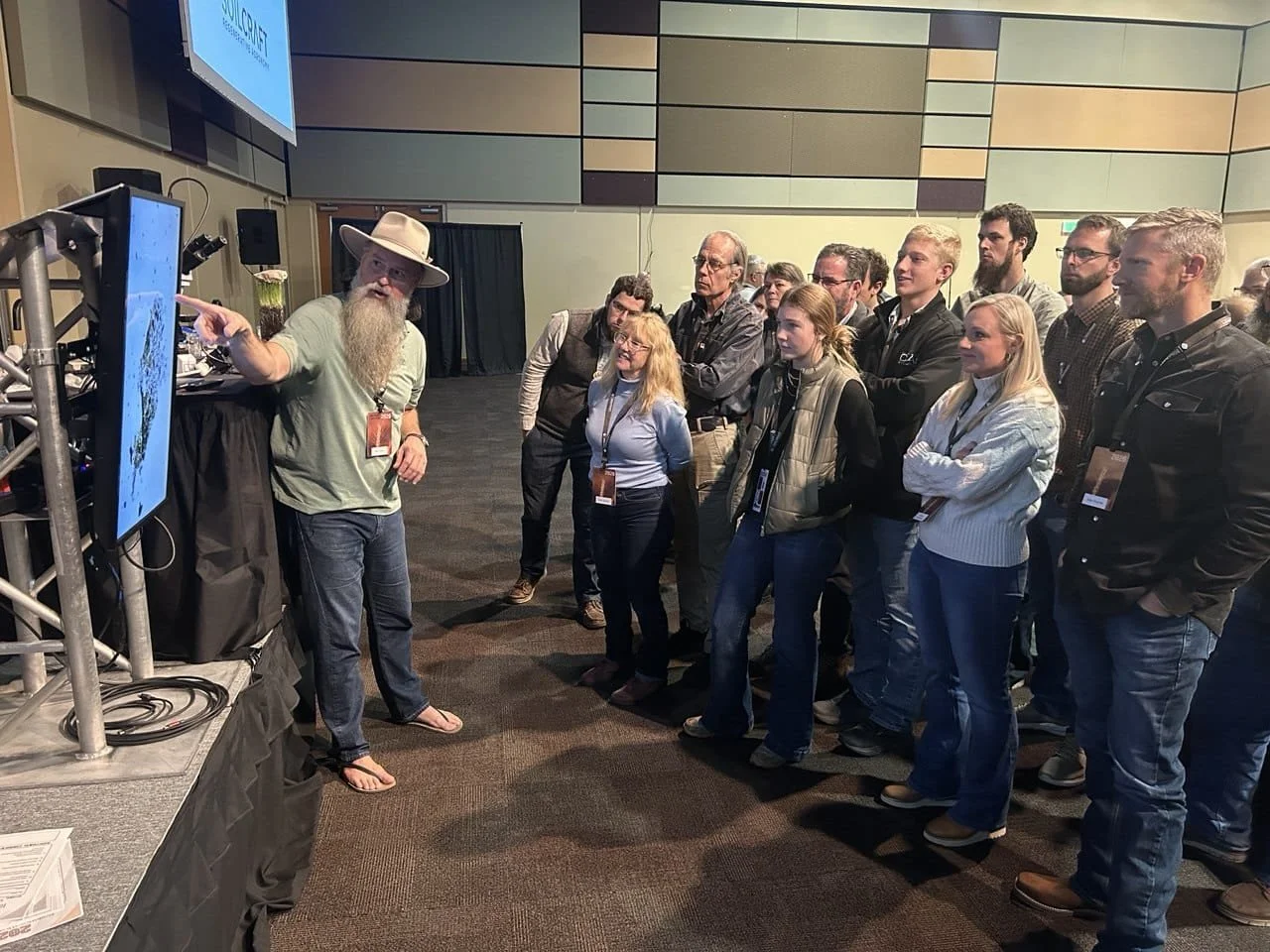
When you really begin to understand the biology and life in your soil — and make that your focal point — you stop fighting the land and start regenerating it, which is how farms become more resilient, more productive, and healthier long term.
“When you shift focus from just adding inputs to really understanding and working with the biology in your soil, you activate the systems that naturally support plant health and long-term farm resilience.”
— Chad Meinders
What Soil CPR can afford you
Reintroduces beneficial soil biology — helping transition soils from “dead dirt” to vibrant, living ecosystems that support plant growth.
Supports microbial diversity in the soil, which is essential for nutrient cycling and plant health.
Encourages vigorous root growth, allowing plants to access water and nutrients more effectively.
Enhances nutrient utilization, so plants can use nutrients more efficiently, potentially reducing the need for synthetic fertilizers.
Improves soil structure and aggregation, creating a healthier environment for roots and soil organisms.
Boosts moisture infiltration and retention — meaning soils can absorb and hold more water, reducing irrigation needs.
Reduces soil bulk density in heavier soils, making it easier for roots to penetrate.
Increases cation exchange capacity (CEC), improving the soil’s ability to hold and exchange nutrients.
Supplies organic matter to the soil, which is essential for long-term fertility and carbon storage.
Promotes natural nutrient cycling, helping break down organic materials into plant-available forms.
Supports erosion reduction by improving soil structure and stability.
Can help reduce fertilizer costs over time by enhancing natural fertility processes.
Improves biological resilience in the soil, meaning a more stable system that can better withstand stresses like drought or temperature swings.
Helps create nutrient-rich soil, which can lead to more robust plant growth and higher yields.
Aids in retention of rainfall, making better use of natural precipitation and reducing runoff.
Education and consulting support help farmers understand and implement soil health principles effectively.
Hands-on courses increase confidence in managing soil biology and ecological processes on the farm.
Offers tools for soil monitoring, helping growers make data-informed decisions to optimize soil performance.
Supports long-term ecological recovery, fostering a self-sustaining soil system over time.
Bridges gaps between conventional practices and regenerative soil health approaches, giving farmers a path to more sustainable agriculture.